May 13, 2026
Story by Amanda Staab
Photo by Joe Vinduska
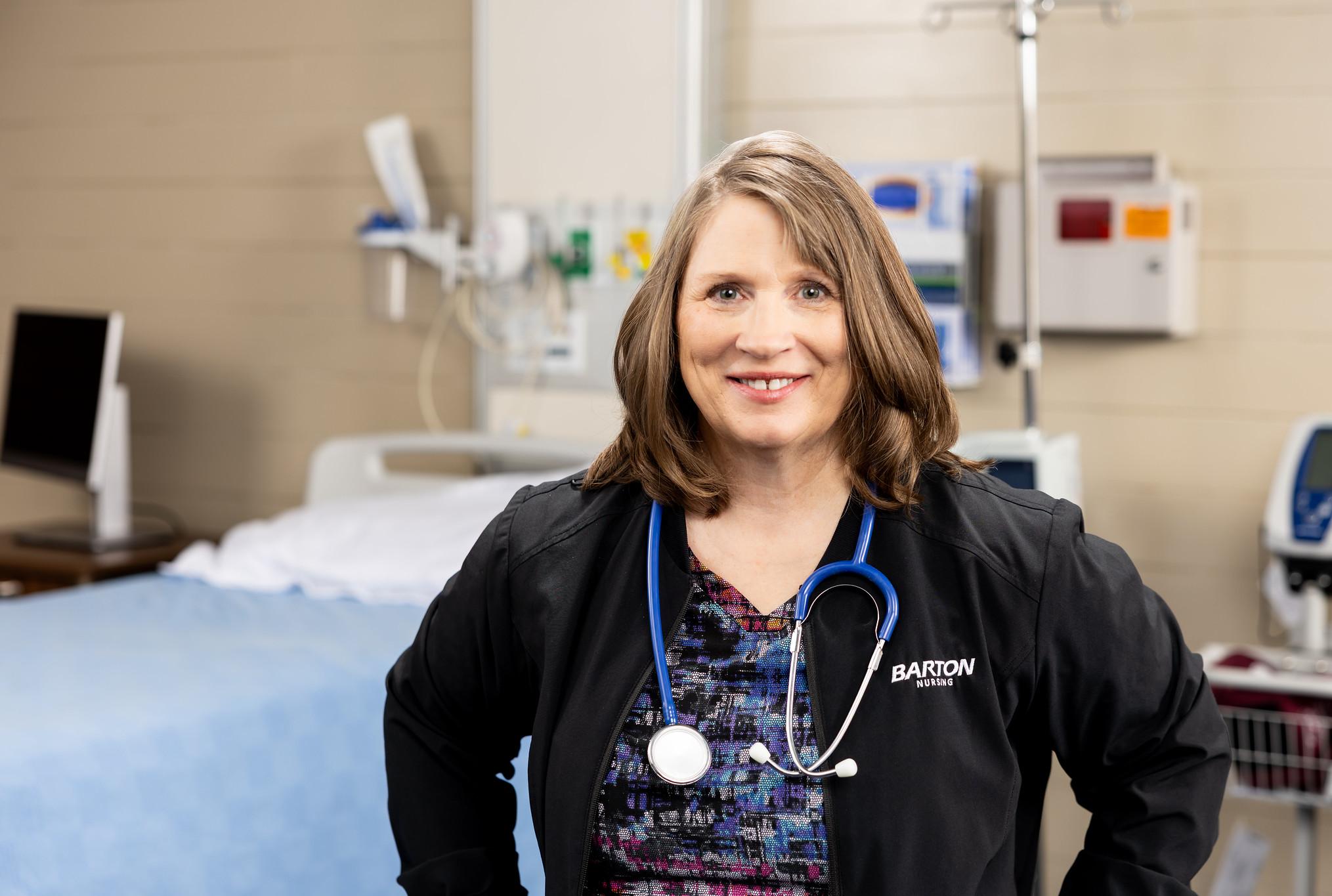
For Renae Skelton, a career in nursing started long before she stepped into a classroom or clinical setting.
Growing up in Rossville, Kansas, she saw firsthand the impact a nurse could have on a community. When something went wrong, whether it was a cut, rash, or unexpected illness, her family often turned to a neighbor who was a registered nurse.
“Anytime we needed an opinion, we went next door,” Skelton said. “Looking back, that’s really where my interest in nursing began.”
That early exposure turned into hands-on experience in high school, when she worked as a certified nurse aide in a local nursing home. It was there she realized she had found her path.
Skelton graduated from the practical nursing program at Barton Community College in 1989 and continued her education at Fort Hays State University, becoming a registered nurse in 1991. She has now spent 35 years in the profession.
Over the course of her career, she has worked in a variety of settings, including school nursing, public health, home health, psychiatric nursing, medical-surgical units, and outpatient services. That range, she said, is one of the most rewarding parts of the profession.
“The best part of being a nurse is the patients you serve and the variety of areas you can work in,” she said. “What stands out most is building relationships with patients and their families.”
Those relationships have kept her grounded through both the rewarding and the difficult moments.
“Nursing isn’t always easy,” she said. “There are hard days.”
Some of the most challenging experiences came while working with children who had been abused, as well as patients facing long-term disabilities or end-of-life care.
“As a mother and grandmother, that was especially difficult,” she said. “When patients are dealing with life-changing conditions, you are also helping their families through that process.”
Despite those challenges, Skelton said the role of a nurse is often misunderstood.
“One common misconception is that nurses simply follow doctors’ orders,” she said. “In reality, nurses are with patients around the clock. They are assessing, monitoring, and using clinical judgment to recognize changes and respond quickly.”
That level of responsibility plays a critical role in patient outcomes, she said.
Skelton also expanded her clinical expertise over time. While working in outpatient services, she developed a focus in wound care, completed additional training, and earned a wound care certification.
In 2014, she returned to Barton, this time as an instructor.
The transition from bedside nursing to the classroom came with its own learning curve, prompting her to complete a master’s degree in nursing education.
“I wanted to better understand the educational side of it,” she said. “Not just what to teach, but how to teach it.”
She spent seven years teaching at the practical nursing level, covering courses such as fundamentals of nursing, medical-surgical nursing, mental health, and professional roles and issues.
“I truly enjoyed working with students,” she said.
In the summer of 2020, Skelton stepped into her current role as director of nursing.
Today, she leads the program with a focus on preparing students for both the technical and human sides of the profession, something she knows firsthand is essential.
Looking ahead, Skelton has set a new professional goal following a recent personal experience. After her granddaughter was diagnosed with Type 1 diabetes, she plans to become a certified diabetes care and education specialist.
“It hits close to home,” she said. “If I can help other families navigate that, I want to.”
Reflecting on her career, Skelton credits the people she has worked alongside as much as the work itself.
“I have been fortunate to work with so many great nurses, aides, providers, and patients,” she said.
For those considering a future in nursing, her advice is simple.
“If you have a heart for caring for others, this might be the right path for you,” she said.